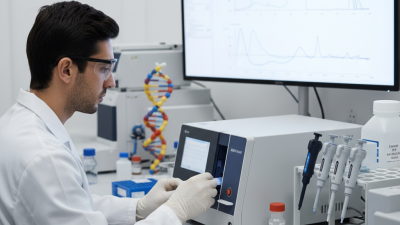
What is PCR Fast and How Does It Work?
PCR Fast is revolutionizing molecular biology. It significantly speeds up the polymerase chain reaction (PCR) process. According to a recent market analysis report by Research and Markets, the global PCR market is projected to grow to $10.5 billion by 2025. This growth reflects the high demand for faster, more efficient diagnostics.
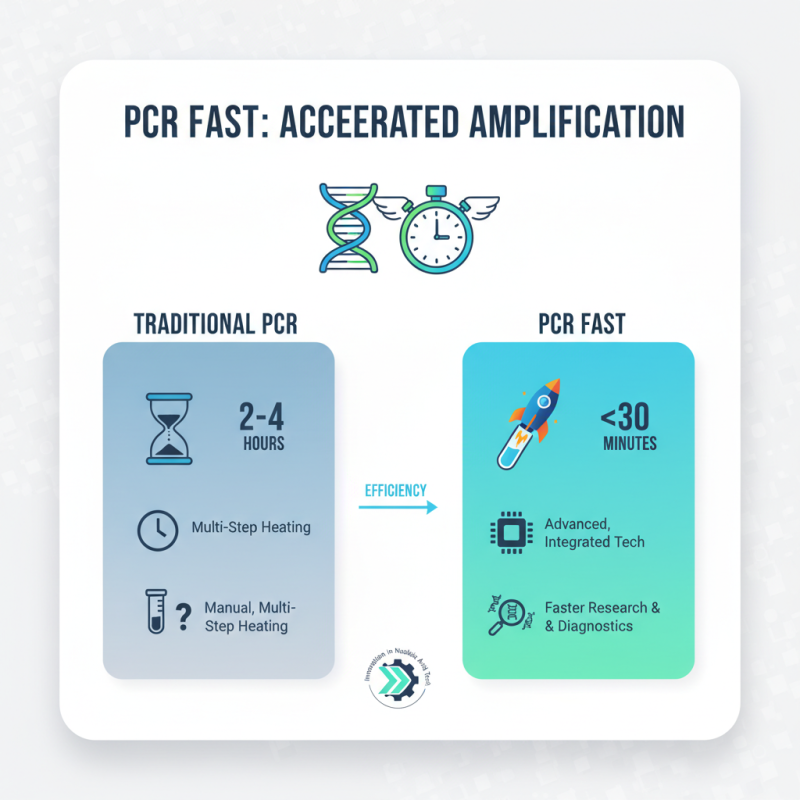
PCR Fast utilizes advanced technology to reduce processing time. Conventional PCR can take several hours. However, PCR Fast can deliver results in a fraction of that time. Some systems boast results in just 30 minutes. This rapid turnaround is critical in clinical settings, especially during disease outbreaks.
Nonetheless, challenges remain. Rapid amplification may compromise accuracy in some cases. As the industry adapts, ensuring reliable data while improving speed is essential. Striking the right balance in PCR Fast technology will determine its future impact on diagnostics and research.
What is PCR Fast: An Overview of Its Significance in Rapid Testing
PCR Fast, or Polymerase Chain Reaction Fast, plays a crucial role in rapid testing. This technique amplifies tiny amounts of DNA quickly. In healthcare, its speed is vital for diagnosing infectious diseases. Fast results can mean timely treatments, which can save lives. Many laboratories now rely on PCR Fast for its accuracy and efficiency.
The process involves repeating cycles of heating and cooling. This helps duplicate the target DNA. The short turnaround time can be impressive. However, not all tests yield perfect results. False positives and negatives are still possible. Quality control is essential to ensure reliability. Continuous improvement in the methodology is needed.
Healthcare professionals often face challenges with interpretation. Different samples can give varying results. Understanding these nuances is important for effective treatment. PCR Fast is an exciting tool, but caution is necessary. Balancing speed and accuracy is an ongoing journey in medical science.
The Mechanism of PCR Fast: Key Steps in the Amplification Process
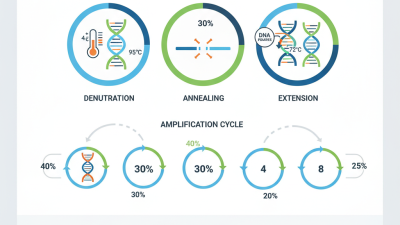
PCR Fast is a powerful tool for amplifying DNA rapidly. The core mechanism involves three main steps: denaturation, annealing, and extension. During denaturation, DNA strands separate at high temperatures, typically around 95°C. This creates single strands, ready for the next phase.
Next, in the annealing step, primers bind to the target DNA sequences at about 50-65°C. Here, the specificity of the reaction takes shape. The correct primers must attach precisely for amplification to occur. Studies reveal that optimal annealing temperature is crucial. A slight adjustment can significantly impact efficiency and yield.
Finally, extension occurs when the temperature rises back to approximately 72°C. DNA polymerase synthesizes new strands, using the original strands as templates. Research indicates that this enzyme can replicate DNA at a speed of about 1,000 base pairs per second. However, this process is not infallible. Errors during replication can lead to mutations, reducing the accuracy of the amplified DNA. Continuous refinement and optimization are vital for achieving the best results in PCR Fast methodologies, highlighting the balance between speed and precision in molecular biology.
What is PCR Fast and How Does It Work? - The Mechanism of PCR Fast: Key Steps in the Amplification Process
| Step |
Description |
Temperature (°C) |
Duration |
| Denaturation |
Separation of DNA strands |
94-98 |
20-30 seconds |
| Annealing |
Binding of primers to target DNA |
50-65 |
20-40 seconds |
| Extension |
Synthesis of new DNA strands |
72 |
30 seconds to several minutes |
| Final Extension |
Completing synthesis of any remaining DNA |
72 |
5-10 minutes |
Applications of PCR Fast in Medicine: Diagnostics and Pathogen Detection
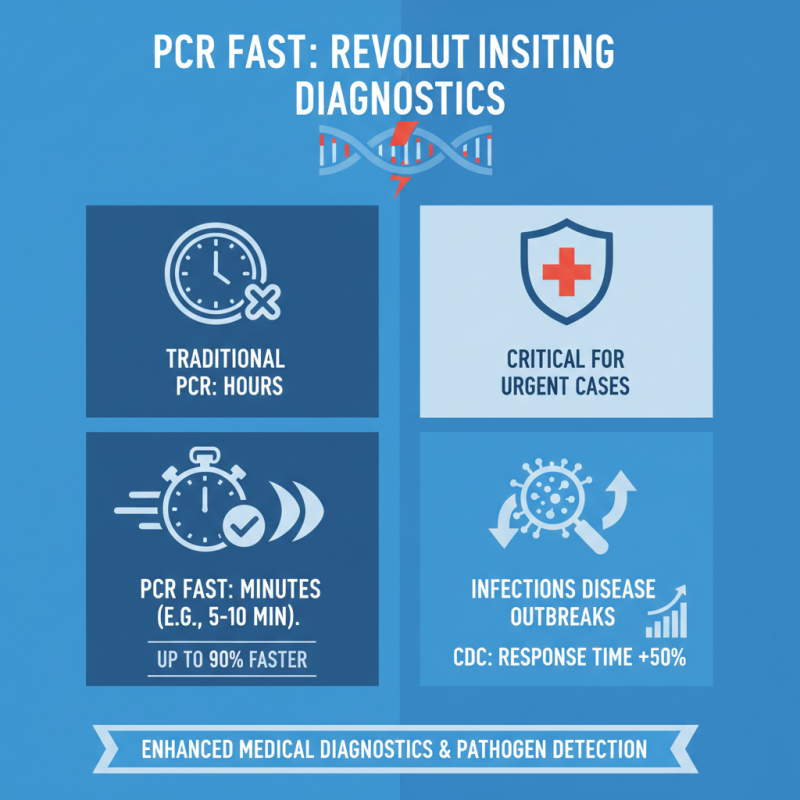
PCR Fast is revolutionizing medical diagnostics and pathogen detection. Traditional PCR can take hours. PCR Fast reduces this time significantly, often to mere minutes. This speed is critical in urgent medical scenarios like infectious disease outbreaks. The CDC estimates that rapid diagnostics can enhance response times by up to 50%.
In practice, PCR Fast is utilized in several areas. For instance, respiratory infections, such as COVID-19, benefit immensely. Rapid testing allows for immediate isolation protocols. According to a recent report, timely diagnosis can decrease transmission rates by up to 70%. . However, there are challenges. False negatives still pose risks, particularly in early infections. This issue warrants continuous improvement in assay designs and protocols.
Healthcare professionals often face a learning curve with new technology. Training programs need to keep pace with innovations. Human error can also impact testing accuracy. Continuous data monitoring and feedback loops are essential. Ultimately, while PCR Fast presents many benefits, acknowledging its limitations is crucial for effective medical applications.
Comparative Analysis: PCR Fast versus Traditional PCR Techniques
PCR Fast is an innovative approach to polymerase chain reaction, designed to improve efficiency. It uses advanced technologies to reduce the time needed for amplification. Traditional PCR methods can take several hours, while PCR Fast aims for quicker results. This speed can greatly enhance research and diagnostic processes.
When comparing PCR Fast with traditional techniques, several factors come into play. Speed is a significant advantage of PCR Fast. However, this speed can sometimes compromise the accuracy of results. In some cases, traditional methods yield more reliable outcomes, albeit at a slower pace. Researchers must weigh the benefits of rapid results against potential inaccuracies that may arise.
It's important to note that PCR Fast might not be suitable for all applications. Some complex samples can show variability in results. This inconsistency might lead to further complications in analysis. Thus, while PCR Fast offers exciting advancements, researchers should remain cautious. Balancing speed and precision is essential in the world of genetic analysis.
Future Innovations in PCR Technology: Trends and Implications for Research
The field of PCR technology is advancing rapidly. Innovations are emerging to enhance efficiency and accuracy. Researchers are exploring new materials and techniques to make PCR processes faster. Some aim to reduce the time taken for results. This is crucial in pandemic response and infectious disease detection.
A key trend is the miniaturization of PCR systems. Smaller devices allow for on-site testing, drastically altering how samples are collected and analyzed. Imagine diagnostic tools that fit in a backpack. However, the reliability of results from such portable units must be scrutinized.
Another exciting development is integrating artificial intelligence into PCR workflows. AI can predict reactions and optimize conditions. It can analyze vast datasets quickly and spot patterns. This could lead to significant breakthroughs. Yet, the reliance on AI raises questions about oversight and verification. Ensuring accuracy and understanding results is paramount. As we advance, it's essential to balance innovation with rigor.
Trends in PCR Technology Innovations