China Top 10 RT PCR Kit Manufacturers for Global Buyers?
Choosing reliable RT-PCR suppliers requires more than comparing prices, product photos, or catalog size. Global buyers need evidence of technical capability, manufacturing consistency, documentation, and responsive support. This introduction to China Top 10 RT PCR Kit Manufacturers for Global Buyers examines companies through those practical requirements.
Stephen Bustin, a leading qPCR methodologist, has warned: “A precise result is not necessarily an accurate result.” That principle matters when evaluating an rt pcr kit. A bright amplification curve can still hide weak primer design, poor calibration, unstable reagents, or unclear validation data. Buyers should examine analytical sensitivity, specificity, limit of detection, shelf life, lot-to-lot consistency, and instrument compatibility.
Details matter.
A dependable manufacturer should explain its quality system clearly. It should provide certificates, technical datasheets, batch information, and usable protocols. Experience also appears in small things, such as sealed reagent tubes, readable labels, cold-chain planning, and fast answers to troubleshooting questions. These details can prevent delays in a busy laboratory.
This guide considers manufacturers serving research, clinical, veterinary, and public-health markets, without assuming every supplier fits every application. Some companies may excel in OEM production, while others focus on finished branded kits. No ranking is flawless. Product availability, certifications, regional registration, and shipping conditions can change. Buyers should independently verify current documents and local requirements before placing an order. Reliability is not claimed from reputation alone; it must be tested through evidence, samples, communication, and repeat performance.
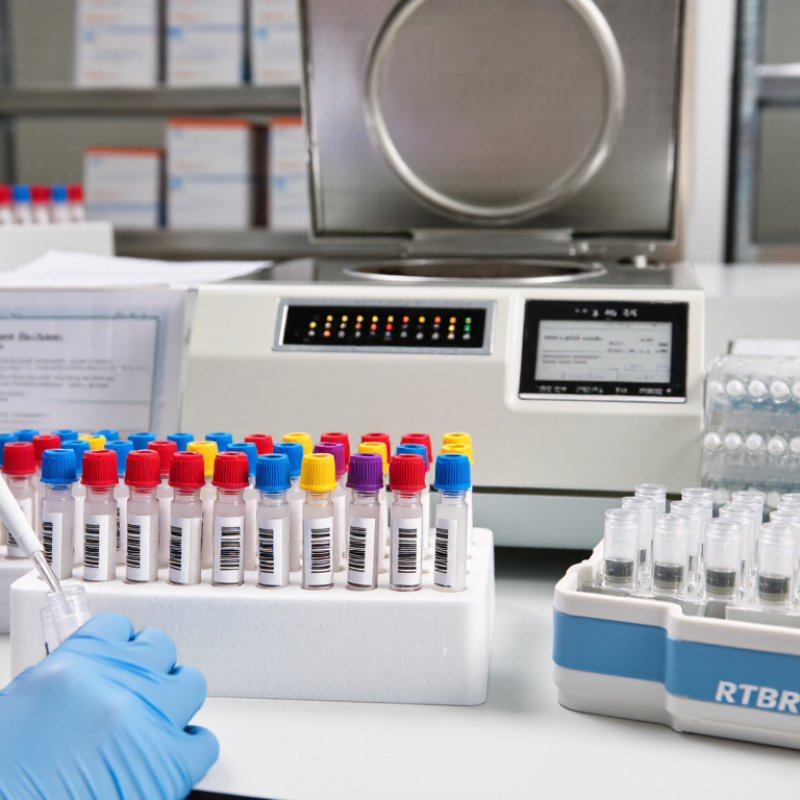
RT-PCR Kit Manufacturing in China: Industry Scope and Product Types
China’s RT-PCR kit manufacturing sector covers more than reagent assembly. Facilities commonly produce primers, probes, reverse transcriptase, DNA polymerase, buffers, controls, and extraction materials. Product types include one-step and two-step RT-PCR kits, multiplex panels, lyophilized formats, and ready-to-use liquid mixes. Some factories also provide OEM development, filling, labeling, and stability testing for overseas buyers.
Market data supports this broad scope. MarketsandMarkets reported that the global PCR technologies market could grow from about USD 10.1 billion in 2023 to USD 15.4 billion by 2028. Grand View Research also identifies molecular diagnostics as a growing market through 2030. These figures indicate strong demand, but they do not guarantee consistent kit performance. Buyers should examine analytical sensitivity, specificity, limit of detection, lot-to-lot data, and real-time stability records. I have seen specifications look impressive while their validation details remain thin. That gap deserves attention.
Tips: Request sample lots, raw performance data, ISO 13485 certification evidence, and clear cold-chain instructions. Check whether the manufacturer controls critical enzymes internally or purchases them from outside suppliers. Confirm the target specimen type, instrument compatibility, and local registration pathway before placing a large order. A lower unit price may hide higher verification costs. That is easy to underestimate.
China RT-PCR Kit Manufacturing: Product Types and Industry Scope
RT-PCR kits for clinical diagnostics, research, food testing, environmental monitoring, and veterinary applications are commonly differentiated by workflow design. The chart compares the number of core laboratory stages in representative product formats, rather than company sales or market-share data.
One-step formats combine reverse transcription and amplification in one tube. Two-step formats separate cDNA synthesis from amplification. Multiplex and lyophilized formats generally use a single-tube amplification workflow, while supporting multiple targets or improved transport stability.
How to Evaluate Chinese RT-PCR Kit Manufacturers
China Top 10 RT-PCR Kit Manufacturers for Global Buyers?
How to Evaluate Chinese RT-PCR Kit Manufacturers
A credible evaluation starts with evidence, not a polished catalogue. Grand View Research valued the global molecular diagnostics market at about USD 13.3 billion in 2023. This growth attracts capable suppliers and inexperienced traders. Check the manufacturer’s legal registration, ISO 13485 certification, production address, and quality-control scope. The certificate should cover diagnostic kits, not unrelated products.
Request independent performance data. Examine limit of detection, analytical specificity, cross-reactivity, inclusivity, precision, and lot-to-lot consistency. Ask for raw validation tables, not only percentages. A reliable supplier should provide stability data at intended storage temperatures. WHO’s Laboratory Quality Management System guidance stresses documented procedures, traceability, and corrective actions. These details matter when shipments face heat, delays, or customs inspection.
Review clinical evidence from samples matching your target population. Compare Ct-value reproducibility across instruments and operators. Confirm primer coverage against current sequence databases. Also inspect external quality assessment results and post-market complaint records. ISO 13485 alone does not prove clinical performance. That point is often missed. I would also test pilot lots before signing a large contract, although this adds time and cost. Supplier communication deserves a score: delayed technical answers may reveal weak documentation later. Performance can look excellent on paper, yet field reliability remains uncertain without local verification.
China’s Top 10 RT-PCR Kit Manufacturers for Global Buyers
China’s Top 10 RT-PCR Kit Manufacturers for Global Buyers
China’s RT-PCR manufacturing sector serves hospitals, research centers, and private laboratories worldwide. MarketsandMarkets estimated the molecular diagnostics market at about USD 13.3 billion in 2023. It also projects strong growth through 2028, driven by infectious disease testing and laboratory automation. This demand has encouraged many Chinese manufacturers to improve reagent stability, documentation, and production capacity.
A practical top-ten review should examine more than catalogue size. Reliable suppliers should show ISO 13485 quality systems, clear analytical sensitivity data, and lot-to-lot consistency. Buyers should also check whether kits support local regulatory requirements, including EU IVDR or applicable national rules. In real procurement work, small details matter. A kit may perform well in a controlled trial but struggle with inhibitors in routine samples. That gap deserves attention.
Tips:
Request independent validation data, not only internal brochures. Confirm transport conditions, shelf life, extraction compatibility, and technical support response times. Compare Ct-value consistency across several lots. The WHO emphasizes quality-assured diagnostics and competent laboratory processes, so supplier selection should include training and post-sale assistance. A ranking is never perfect. Regional service, language support, and customs documentation can change the final decision. Good performance on paper is only one part of dependable supply.
Steps for Selecting and Importing RT-PCR Kits from China
Selecting and importing RT-PCR kits from China requires more than comparing prices. Define the target pathogens, sample types, detection limits, and intended laboratory use. Ask each manufacturer for technical files, quality certificates, performance data, and recent batch records. Check whether the product is registered or accepted in your destination market. Requirements can differ widely.
Request evaluation samples before placing a large order. Test them with known positive and negative materials under your own laboratory conditions. Review sensitivity, specificity, inclusivity, cross-reactivity, shelf life, and storage temperatures. A clear instruction sheet matters. So does stable packaging. Check lot numbers and expiration dates before shipment. Keep written records of every conversation and document.
Tips: Confirm the manufacturer’s facility details through independent sources. Ask for a video audit or an on-site inspection when practical. Verify whether the export documents match the invoice, labels, and packing list. Agree on cold-chain responsibilities, temperature monitoring, insurance, and delivery terms in writing. Customs delays can damage temperature-sensitive kits. Plan extra time. A complete file may still contain gaps, so have a qualified regulatory specialist review it. Do not assume a certificate proves clinical suitability. It only supports part of your assessment.