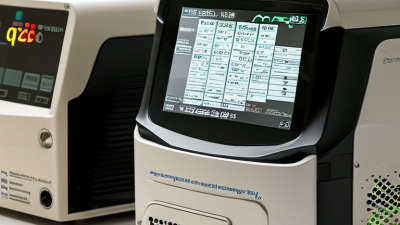
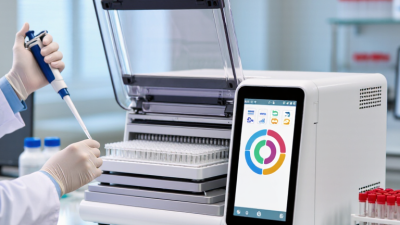
China’s biotechnology sector includes manufacturers of real-time PCR instruments, conventional thermocyclers, reagents, and laboratory consumables. For buyers comparing qpcr and pcr suppliers, the challenge is not simply finding a familiar brand. It is matching a product to actual laboratory needs. A diagnostic laboratory may prioritize stable fluorescence detection and service support, while a research group may care more about flexible protocols, software, and running costs.
This guide examines Chinese manufacturers through practical criteria: product range, technical documentation, quality systems, application support, and access to replacement parts. A product brochure can list impressive specifications, but day-to-day performance depends on details such as temperature uniformity, calibration options, and how clearly troubleshooting steps are explained. Small details matter.
The companies discussed may serve different markets, and not every supplier will suit every buyer. Some focus on instruments; others offer reagents or complete workflows. Publicly available information can also change, so claims should be checked against current datasheets, certifications, and direct supplier responses before purchase. No shortlist is perfect. This overview is intended as a starting point, not a substitute for product evaluation or independent technical review. Where possible, readers should compare sample data, warranty terms, service response times, and compatibility with existing laboratory procedures. Those checks help distinguish a low initial price from dependable long-term value.
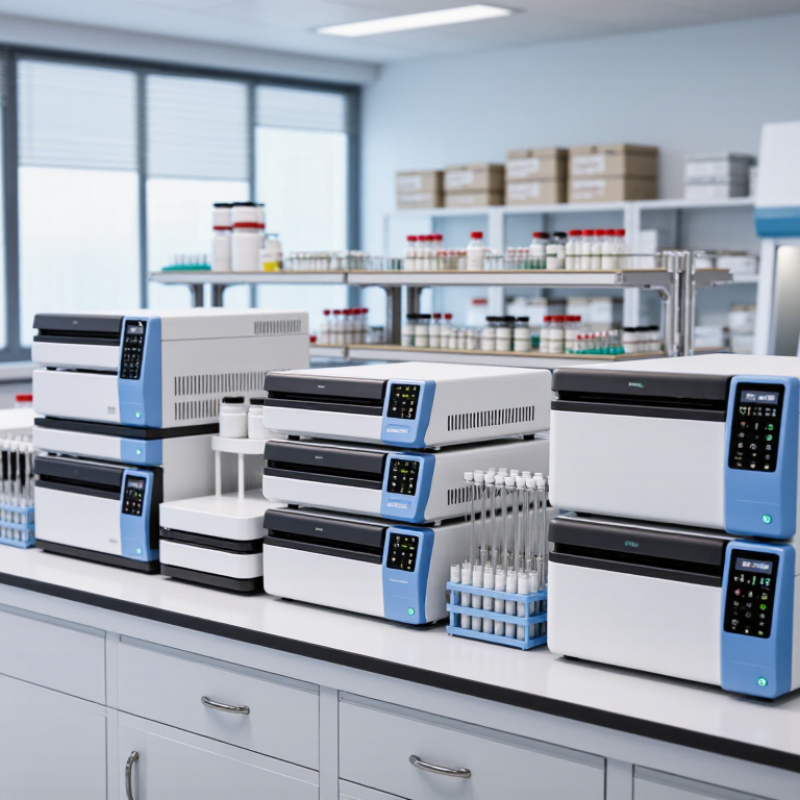
China’s PCR and qPCR manufacturing system is organized as a layered supply chain. Public laboratories and universities often develop assays, enzymes, and amplification methods. Specialized factories then convert these technologies into instruments, reagents, and complete testing systems. This separation allows faster scale-up, but it can weaken communication between researchers and production teams.
Contract manufacturing is central. One facility may produce plastic consumables, another may formulate master mixes, while a separate site assembles thermal cyclers. Larger manufacturers usually combine research, tooling, quality control, and after-sales service. Regional clusters also matter, especially around major medical-device and biotechnology centers. According to Grand View Research’s 2024 PCR market analysis, the global PCR market was valued at more than USD 10 billion in 2023. Asia-Pacific remains one of its fastest-growing regions.
Quality depends on documentation, not only equipment. Chinese manufacturers serving regulated markets commonly operate under ISO 13485 systems and follow National Medical Products Administration requirements. Their audits examine raw-material traceability, contamination control, calibration records, and batch consistency. MarketsandMarkets also identifies expanding molecular testing demand as a major PCR growth driver. Still, published market estimates use different definitions. That distinction is often blurred. Buyers should verify validation data, not rely on factory scale alone. In practice, the strongest suppliers can show stability studies, lot-release records, and clear separation between development and production areas. The system is efficient, but not perfectly uniform.
China’s PCR and qPCR manufacturing sector includes established life-science suppliers, specialist instrument makers, and newer companies focused on laboratory consumables. Rather than treating one company as the clear leader, buyers can compare manufacturers by product range, documented quality controls, service coverage, and evidence from routine laboratory use. Look closely at thermal cyclers, real-time fluorescence systems, extraction workflows, and compatible plates or tubes. Small details matter.
A reliable supplier should provide clear instrument specifications, validated operating procedures, and accessible technical support. Ask how temperature uniformity and fluorescence performance are tested, and request relevant evaluation data before making a purchase. For consumables, check material consistency and fit with the chosen instrument. These checks are practical, not glamorous. They can also reveal gaps that a polished catalogue may miss. Public information does not always make direct comparisons easy, so independent verification remains important. My own assessment would be cautious: a broad product catalogue alone does not prove dependable performance across different laboratory settings.
This representative PCR thermal profile shows commonly used step temperatures, not manufacturer-specific performance data. Exact conditions vary with the assay, primers, and reagents. qPCR uses the same core amplification principle, with fluorescence measured during cycling.
Chinese qPCR and PCR manufacturers supply tools for routine testing, research, and clinical laboratory workflows. Their instrument ranges may include compact, single-tube thermal cyclers and real-time PCR systems with multiple sample blocks. Some systems offer gradient settings, touchscreen controls, and fluorescence channels for monitoring amplification.
A lab manager should check block capacity, channel configuration, software export options, and service support before choosing a system. Small details matter.
Reagent catalogs commonly cover PCR master mixes, reverse-transcription mixes, polymerases, buffers, and nucleic acid extraction kits. Assays may include primer and probe sets, reference controls, and ready-to-use panels designed for defined targets.
Product documentation should explain reaction conditions, sample compatibility, storage, and performance limits. These details are more useful than broad claims of sensitivity.
Not every assay suits every instrument or sample type. Buyers should review validation data and test products with representative samples when possible. That takes time. It can also reveal practical issues, such as weak signals or difficult result interpretation, that a catalog description may not capture.
Comparing qPCR and PCR manufacturers in China requires more than checking sensitivity claims. Buyers should review performance data, manufacturing controls, and the intended use of each product. For qPCR kits, useful evidence includes amplification efficiency, limit of detection, precision across replicates, and results from clinical or analytical validation. For conventional PCR, assess specificity, yield consistency, and performance across relevant sample types. Ask for lot-release criteria and representative batch records. Small details matter.
Regulatory expectations depend on where a product is made, sold, and used. In China, medical-device products may fall under National Medical Products Administration requirements, while exports can require separate conformity assessment in destination markets. A quality-management certificate, such as ISO 13485, is helpful evidence of controlled processes, but it does not prove that every assay performs well. Check whether registration or clearance applies to the specific product and intended use. Also compare labeling, stability data, change-control practices, and complaint handling. Paperwork can look polished; real-world consistency is harder to judge. Request independent evaluation data when available, and verify that the tested configuration matches the product being purchased. Even then, no single test tells the whole story.
Choosing a qPCR or PCR manufacturer starts with the work your laboratory actually performs. Record sample types, daily run volume, target number, and required turnaround time. A busy diagnostic lab may prioritize throughput, contamination controls, and service response. A research team may need flexible protocols, precise temperature control, and open reagent compatibility. Ask for instrument performance data, including temperature uniformity and repeatability, rather than relying on headline specifications. Grand View Research estimated the global PCR market at about US$10.1 billion in 2023 and projected continued growth through 2030. Market growth matters, but it does not prove a supplier suits your workflow. A shiny screen is not enough.
For a practical assessment, request installation records, maintenance intervals, training details, and examples of validation data from comparable applications. Check whether the manufacturer documents assay conditions clearly. The MIQE guidelines in Clinical Chemistry emphasize transparent reporting of qPCR assay design and experimental conditions, useful criteria when reviewing supplier protocols. Test candidate systems with your own representative samples, including low-concentration targets and routine controls. Note hands-on setup time, failed runs, and how easily staff interpret results. Then compare total operating costs, including consumables, calibration, and service—not just the instrument price. A supplier questionnaire helps, but it cannot replace bench testing; we sometimes underestimate how much small workflow differences matter.
| Assessment area | qPCR manufacturer considerations | Conventional PCR manufacturer considerations | Evidence to request |
|---|---|---|---|
| Intended application | Confirm suitability for absolute or relative quantification, gene-expression studies, or validated diagnostic workflows, as applicable. | Confirm suitability for endpoint amplification, cloning, genotyping, or other intended workflows. | Application notes, assay documentation, and data generated with a comparable sample type and workflow. |
| Instrument compatibility | Check supported fluorescence channels, optical compatibility, consumables, software, and dye or probe requirements. | Check block format, tube or plate compatibility, temperature-control specifications, and workflow requirements. | Compatibility lists, instrument manuals, and a demonstration using the laboratory’s planned setup. |
| Analytical performance | Review amplification efficiency, linear range, limit of detection, repeatability, and performance across the claimed concentration range. | Review amplification specificity, yield consistency, and performance with the intended template and amplicon size. | Test protocols, representative raw data, replicate results, and clearly stated acceptance criteria. |
| Controls and contamination management | Establish appropriate positive, negative, and no-template controls; assess carryover risks, especially for high-throughput workflows. | Establish positive and negative controls and procedures to reduce amplicon carryover between preparation and post-amplification areas. | Control recommendations, contamination-control procedures, and sample workflow guidance. |
| Multiplexing and throughput | For multiplex assays, verify channel availability, spectral compensation requirements, and validation for the specific target combination. | Compare batch capacity, supported reaction formats, and suitability for the laboratory’s sample volume. | Multiplex validation data, throughput specifications, and workflow or capacity calculations. |
| Quality and regulatory documentation | Match documentation and regulatory status to the intended research, clinical, or other regulated use; do not infer assay performance from certification alone. | Review manufacturing controls, product specifications, and any applicable regulatory documentation for the intended use. | Current certificates, declarations, lot-release criteria, traceability information, and product-specific validation documents. |
| Supply and technical support | Assess reagent availability, lot consistency, storage and shipping conditions, software support, and assay troubleshooting capability. | Assess availability of enzymes and consumables, technical guidance, and support for optimization and troubleshooting. | Lead-time estimates, storage instructions, change-notification policy, and defined support channels. |
| Practical selection approach | Shortlist suppliers against the required assay, instrument, and documentation; evaluate candidate products with a predefined verification plan. | Shortlist suppliers against the required reaction format, enzyme or kit needs, and throughput; compare results using the same templates and controls. | A written scorecard covering performance, compatibility, quality documentation, supply reliability, support, and total operating cost. |
Selection note: “Top” depends on the laboratory’s application and acceptance criteria. Verify product claims and suitability directly with the manufacturer before purchase or use.
Visit the official SA government portal www.sacoronavirus.co.za to stay informed about latest COVID-19 updates. Dismiss