Skip to content

China Top 10 PCR Test Kit Suppliers for Reliability

PCR testing is now a critical foundation for infectious disease control, oncology, food safety, and genetic screening. Grand View Research estimated the global molecular diagnostics market at approximately USD 16 billion in 2023. Its continued expansion increases pressure on laboratories to select dependable kit manufacturers. Yet market growth alone does not prove product quality.

The World Health Organization’s 2023 global assessment of in vitro diagnostics emphasizes regulatory oversight, quality management, and reliable access. FIND’s recent diagnostics landscape reports similarly highlight analytical performance, affordability, and supply continuity. These priorities shape this review of China’s top 10 PCR test kit suppliers. The evaluation considers sensitivity, specificity, limit of detection, validation evidence, production capacity, certification, technical support, and batch consistency.

Details matter.

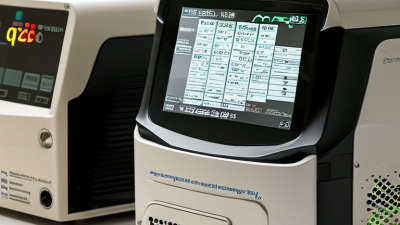
A dependable kit should perform consistently beside a calibrated thermal cycler, even when technicians process many samples during a busy shift. Clear instructions, stable reagents, readable amplification curves, and practical storage requirements also influence real laboratory outcomes. ISO 13485 certification and relevant regulatory registration provide useful evidence, but they cannot replace independent verification. Laboratories should examine evaluation studies, quality-control records, proficiency-testing results, and post-market feedback before purchasing.

This is not a perfect ranking. Public supplier data can be uneven, and published performance may reflect controlled conditions rather than routine laboratory pressure. That limitation deserves attention. The phrase pcr reliability therefore covers more than a low cycle threshold or an attractive product brochure. It includes reproducibility, documentation, logistics, transparency, and the supplier’s response when something goes wrong. The following overview offers a practical starting point, not a substitute for local validation or professional judgment.

China Top 10 PCR Test Kit Suppliers for Reliability

PCR Test Kits in China: Market Scope and Reliability Standards

China’s PCR test kit market covers hospitals, clinical laboratories, universities, and public health programs. It also serves international distributors with different testing requirements. Demand is shaped by respiratory diseases, food safety, veterinary testing, and genetic research.

Each application needs a different validation approach.

Reliability begins with controlled manufacturing. Suppliers should demonstrate quality systems aligned with ISO 13485 and risk management practices consistent with ISO 14971.

Technical files should report limit of detection, analytical specificity, inclusivity, interference testing, and lot-to-lot consistency.

Clear instructions matter. So do readable result controls.

Look closely at daily handling. Check the sealed pouch, lot number, expiry date, and storage temperature before use.

A cold-chain indicator can reveal damage that paperwork misses. Independent verification should compare results across sample types and operators.

Transport simulations are useful, but they cannot represent every warehouse or clinic. Real-world performance can change with extraction methods, inhibitors, and rushed workflows.

This is where supplier experience becomes visible. Ask for stability data, traceability records, complaint procedures, and post-market support.

A polished certificate is not enough. Even strong kits may show weaker performance outside their validated conditions.

Reliability is therefore a continuing process, not a single approval event.
How to Evaluate PCR Test Kit Supplier Reliability

How to Evaluate PCR Test Kit Supplier Reliability

Reliable PCR test kit suppliers show evidence, not polished promises. Check their quality system, manufacturing history, and applicable regulatory documentation. Certifications such as ISO 13485 can support confidence, but certificates alone prove little. Ask for recent performance data, including limit of detection, inclusivity, exclusivity, and invalid-result rates. The data should match the intended sample type and testing workflow.

Request lot-to-lot consistency records and clear quality-control procedures. A dependable supplier explains how it investigates deviations and manages corrective actions. Review stability reports, storage temperatures, expiration periods, and shipping controls. One delayed shipment can disrupt a laboratory’s schedule. Their packaging should protect reagents from temperature changes, with traceable batch information included.

Communication also matters. Test response times before signing a contract. Can the technical team explain an unexpected amplification curve without vague language? Ask for training materials, troubleshooting guidance, and documented change notifications. References from laboratories with similar workloads can reveal practical weaknesses. They may mention slow support or confusing instructions.

A checklist is never perfect. My own evaluation would still include a small verification order, when permitted. This exposes handling problems that documents may hide. Compare repeated results, operator usability, and delivery condition. A reliable supplier accepts difficult questions and provides precise records. That behavior is often more convincing than impressive marketing.

Profiles of China’s Top 10 PCR Test Kit Suppliers

China’s top ten PCR test kit suppliers differ in manufacturing depth, validation support, and customer service.

Supplier 1 focuses on respiratory panels, using sealed cartridges and clear workflow instructions.

Supplier 2 develops high-throughput kits for hospital laboratories, with stable amplification across multiple instrument platforms.

Supplier 3 serves research facilities and offers flexible primer design for approved laboratory applications.

Supplier 4 emphasizes internal quality control, including extraction checks and positive controls.

Supplier 5 provides lyophilized reagents, which can simplify storage and transport.

Supplier 6 supports private-label production, but buyers should inspect documentation carefully.

Supplier 7 is known for automation compatibility and practical software guidance.

Supplier 8 concentrates on multiplex assays, helping laboratories test several targets in one reaction.

Supplier 9 offers smaller package sizes for regional laboratories with moderate sample volumes.

Supplier 10 combines technical training with after-sales troubleshooting, an important advantage during method verification.

Real purchasing experience shows that reliability depends on more than a low cycle threshold. Batch consistency, lot traceability, shelf-life data, and transparent performance studies matter equally. Ask for independent verification records.

No supplier is flawless. Some catalogs look stronger than their technical files.

Reviewers should compare analytical sensitivity, specificity, inclusivity, interference testing, and instrument compatibility.

Service response also deserves testing before a large order. A delayed answer can reveal future difficulties.

Facilities should request samples, inspect labeling, confirm storage conditions, and document every verification step.

Supplier rankings may change as manufacturing controls, certifications, and support quality develop.

Product Quality, Certifications, and Manufacturing Capabilities

China Top 10 PCR Test Kit Suppliers for Reliability

Reliable PCR test kit suppliers should prove quality through repeatable evidence, not attractive brochures. Reviewers should examine analytical sensitivity, specificity, inclusivity, and interference studies. Lot-to-lot consistency also matters. A strong supplier provides clear batch records, expiry data, storage instructions, and traceability from raw materials to finished kits.

Look for ISO 13485 quality management certification and documented compliance with applicable market requirements. Depending on the destination, additional registrations or conformity assessments may apply. Certificates should be verified through official sources. A certificate alone is not enough. Independent laboratory reports, proficiency testing, and real-time stability data offer stronger assurance. Small details matter, such as readable labels, sealed reagent tubes, and controlled cold-chain packaging.

Manufacturing capability deserves close inspection. Suitable facilities should include monitored clean areas, calibrated instruments, validated production steps, and trained technicians. Automated liquid handling can reduce variation, but only when maintenance records are complete. Suppliers should also explain capacity, lead times, contingency plans, and technical support. During evaluation, request samples from different lots and compare amplification curves under identical conditions. My own assessment would remain cautious if results look perfect without raw data. No supplier is flawless. Even experienced manufacturers can face reagent shortages, equipment downtime, or documentation gaps. Reliable partners disclose these weaknesses and show how they manage them.

China PCR Test Kit Supplier Reliability: Evaluation Criteria

This evidence-based scoring framework uses a 100-point weighting model for comparing PCR test kit suppliers. It emphasizes product quality, regulatory compliance, manufacturing controls, analytical performance, and supply reliability without publishing company or brand data.

Supplier Comparison and Selection Considerations

China Top 10 PCR Test Kit Suppliers for Reliability

Supplier comparison should begin with evidence, not catalogue size. The WHO Global Report on Diagnostics (2021) found that nearly half the world’s population has limited access to essential diagnostics. This makes dependable supply, clear instructions, and stable performance practical concerns, not marketing language.

Compare suppliers using analytical sensitivity, specificity, limit of detection, and cross-reactivity data. Ask for independent validation reports, lot-release records, and real-time stability results. A reliable supplier should explain transport conditions, temperature excursions, and replacement procedures. ISO 13485 certification supports quality management, but certification alone does not prove every kit performs equally. Look for traceable reference materials and transparent change-control records. Small details matter.

Review production capacity against your monthly demand and emergency needs. The kit should fit your instruments, workflow, and reporting software. Check whether technical support responds within a defined time. Request samples from different lots, then compare cycle-threshold consistency under routine conditions. External quality-assessment results can reveal weaknesses that brochures hide. No scorecard is perfect. I would also question unusually low prices, because reduced cost can conceal shorter shelf life, limited validation, or inconsistent packaging. Suppliers with clear documentation and realistic claims are usually easier to trust over time. WHO, Global report on diagnostics, 2021; ISO 13485:2016.